The two parent companies will invest approximately $100 million in their Moses Lake plant and create 80 new local jobs until 2013. In order to prepare the large scale production start of BMW i vehicles in 2013 it is important to start the carbon fiber manufacturing now. All electricity needed for the production of carbon fibers will come from readily available clean and renewable local hydropower.
Thanks to the emission-free drivetrain and a value added chain designed to be sustainable all along the line, life cycle emission figures for the BMW i3 are at least a third lower than for a highly efficient combustion-engine car. If the BMW i3 is run on electricity from renewable sources, the figures improve by well over 50%.
Carbon fiber technology will fundamentally change the car industry, becoming increasingly important in the quest for lighter-weight materials to reduce fuel consumption and lower CO2 emissions. With the new SGL Automotive Carbon Fibers plant in Moses Lake, BMW Group and SGL Group are proving that sustainable innovations will provide for a cleaner individual mobility of the future.
BMW i3 first car to have a Carbon Fiber Passenger Cell
The first vehicle to use the carbon fibers manufactured in Moses Lake will be the
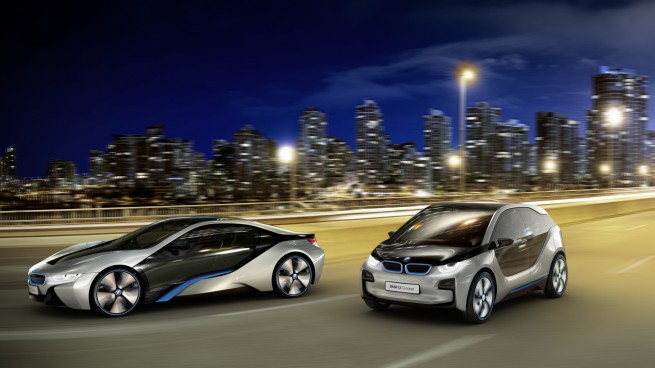
BMW i3, an all-electric car designed to meet the mobility needs of drivers in highly populated urban areas throughout the world. Driven purely by electric power to meet the demands of sustainable and emission-free mobility, the BMW i3 embodies an intelligent form of urban transportation and commuting. Previously known as the Megacity Vehicle, the BMW i3 will be the first BMW with the innovative LifeDrive architecture. The Life module part of the design is the passenger compartment made from high-strength, extremely lightweight carbon fiber-reinforced plastic (CFRP). The use of this high-tech material across large sections of the car ensures the Life module is remarkably light helping to improve the BMW i3’s range and performance.
The first vehicle to use the carbon fibers manufactured in Moses Lake will be the
BMW i3, an all-electric car designed to meet the mobility needs of drivers in highly populated urban areas throughout the world. Driven purely by electric power to meet the demands of sustainable and emission-free mobility, the BMW i3 embodies an intelligent form of urban transportation and commuting. Previously known as the Megacity Vehicle, the BMW i3 will be the first BMW with the innovative LifeDrive architecture. The Life module part of the design is the passenger compartment made from high-strength, extremely lightweight carbon fiber-reinforced plastic (CFRP). The use of this high-tech material across large sections of the car ensures the Life module is remarkably light helping to improve the BMW i3’s range and performance.
Sustainable Plant with Room to Grow
In line with BMW and SGL’s leading roles in sustainable business operations, the decision to build the carbon fiber plant in Moses Lake was based primarily on the availability of clean, renewable hydropower and competitive energy costs in the state of Washington. The entire supply chain – ecological, social and economic – has been aligned. The manufacture as well as processing of the carbon fibers and carbon fiber composites will be achieved with careful consideration for environmental resources and processes have already been developed to recycle carbon fibers and downstream composite materials.
In line with BMW and SGL’s leading roles in sustainable business operations, the decision to build the carbon fiber plant in Moses Lake was based primarily on the availability of clean, renewable hydropower and competitive energy costs in the state of Washington. The entire supply chain – ecological, social and economic – has been aligned. The manufacture as well as processing of the carbon fibers and carbon fiber composites will be achieved with careful consideration for environmental resources and processes have already been developed to recycle carbon fibers and downstream composite materials.
The Moses Lake plant covers 60 acres of land with the option to
purchase additional land for future growth. The plant will initially
run two carbon fiber lines, each with an annual capacity of 1,500
metric tons. After a year of design work with ground-breaking in July
2010, SGL Automotive Carbon Fibers completed the new Moses Lake
Facility in April 2011 after only ten months of construction.
The Moses Lake carbon fibers will be processed into lightweight
carbon fiber fabrics at the second joint venture site in Wackersdorf,
Germany. The carbon fiber reinforced plastic (CFRP) parts and
components will be produced from these fabrics at the BMW plant in
Landshut, Germany. The new BMW i3 will be manufactured from these parts
at the BMW Group plant in Leipzig, Germany.
Dr. Norbert Reithofer, CEO and Chairman of the Board of Management of BMW AG:
“About a month ago we presented the first concept cars being launched under our new sub-brand, BMW i. The BMW i3 and the BMW i8 are cars like no other. With their purpose built design they will set new standards for clean individual mobility of the future. Carbon fibers are a key construction material for the automotive industry of the 21st century and will change the way we develop and build cars.”
Robert Koehler, CEO, SGL Group:
“The manufacture of carbon fibers is a core business for SGL Group and together with our partner BMW Group; we will ensure that carbon fibers play a ground-breaking role in lightweight automotive construction. This new greenfield facility in Moses Lake is a milestone in the use of carbon fibers for large scale production in the automotive industry. This significant investment further underlines our commitment to the U.S., where we already operate carbon fiber and composite part facilities.”
Christine Gregoire, Governor, State of Washington:
“What a great day for Moses Lake and the entire state of Washington. We worked incredibly hard to bring this partnership to Washington State, and I couldn’t be happier to join in the grand-opening celebration. Not only does this partnership create much-needed, good-paying jobs, it opens up new possibilities and solidifies our state’s position as the leading innovator in the green-energy market place. I am confident carbon fiber is the way of the future, and with SGL Automotive Carbon Fibers in Washington State, we will be the premier location for this in-demand product.”
Andreas Wuellner, Managing Director SGL Automotive Carbon Fibers:
“The facility has been erected in only ten month and will be the most cost efficient carbon fiber plant using modern technologies.”
Dr. Joerg Pohlman, Managing Director SGL Automotive Carbon Fibers:
“We received great support from the local authorities of Grant County and Moses Lake, and this was instrumental in being able to move this project ahead so quickly. Big Bend Community College helped to qualify applicants for our facility and this has been very helpful in starting the production at a high level of quality and efficiency.”
